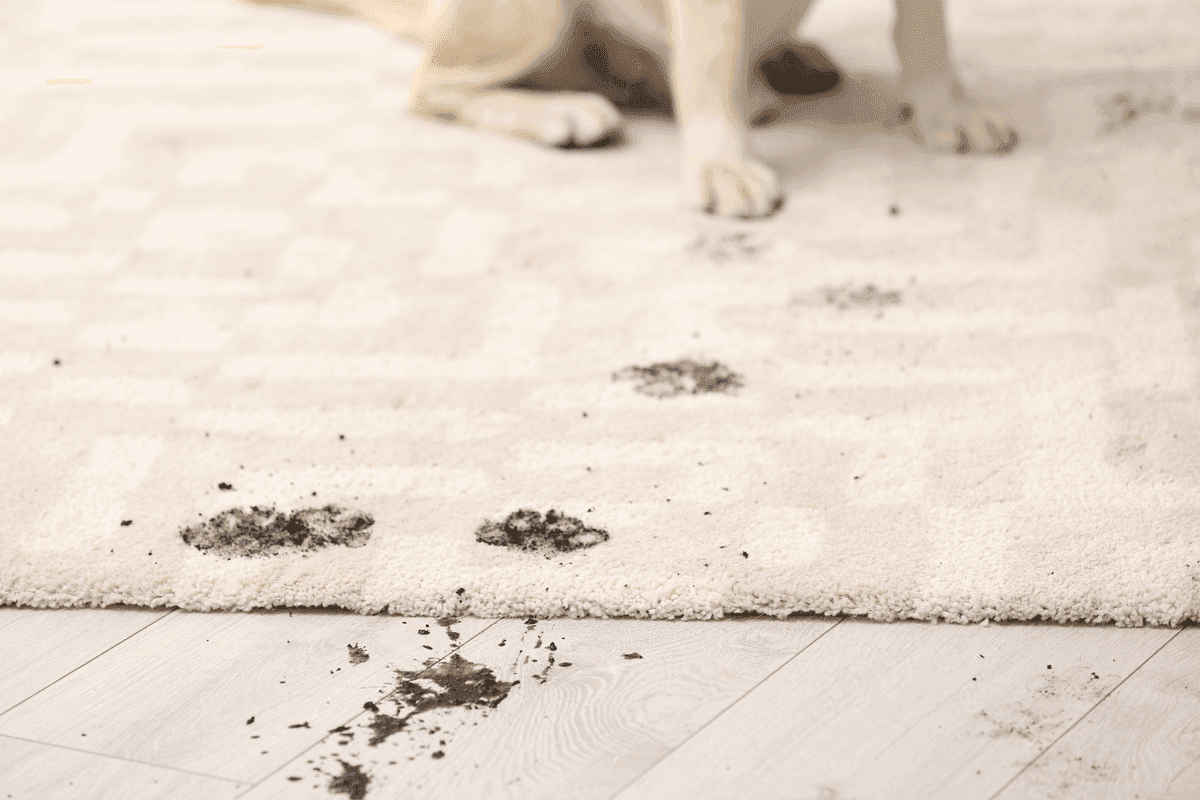
If you live in Martinez or anywhere in Columbia County, you've dealt with red clay on carpet. It comes in on shoes, on the dog's paws, on the bottom of the kids' socks after they've been playing in the yard. And unlike regular dirt, it doesn't just vacuum up and disappear. Red clay stains carpet in a way that regular soil doesn't, and most people find out the hard way that their usual cleaning approach makes it worse.
Here's why red clay is different and what actually works to remove it.
Why red clay bonds differently
Georgia red clay gets its color from iron oxide — the same compound in rust. When iron oxide particles get ground into carpet fiber, they don't just sit on the surface the way sand or dust does. The iron oxide molecules bond to the carpet's dye sites, which are the same sites that hold the carpet's original color. That's why a red clay stain looks like a dye stain rather than a dirt stain. It's essentially a competing dye that has attached itself to the fiber.
Regular vacuuming removes the loose clay particles sitting on top of the pile. It doesn't touch the iron oxide that has bonded to the fiber underneath. That's the part that's still visible after you've vacuumed three times and wondered why the stain won't budge.
What makes it worse
A few common reactions make red clay stains harder to remove:
Scrubbing. Rubbing a wet red clay stain grinds the iron oxide deeper into the fiber and spreads it outward. The stain gets bigger and more embedded with every scrub. Blotting lifts clay out. Scrubbing pushes it in.
Hot water. Heat helps iron oxide bond more firmly to fiber dye sites. Warm or hot water on a fresh clay stain essentially heat-sets it. Cold water slows the bonding process and gives you more time to work.
Bleach. Chlorine bleach can oxidize the iron further and actually make the red color darker and more permanent. It also damages the carpet dye around the stain, leaving you with a bleached ring around a rust-colored center.
Letting it dry first. This one surprises people, but it's true — for red clay specifically, you actually want to let the mud dry before touching it. Wet clay is easier to spread. Once it's dry, you can vacuum or scrape away the bulk of the loose material without pushing iron oxide deeper into the fiber. Then you treat the remaining stain with the right chemistry.
The right approach for fresh red clay
- Let the mud dry completely. Resist the urge to wipe it up while it's wet. Wait until it's dry and crusty.
- Vacuum or scrape the dried clay. Get as much dry material out of the fiber as you can. A stiff brush or the edge of a spoon works for the chunks. Then vacuum thoroughly.
- Apply a small amount of dish soap mixed with cold water. A few drops of plain liquid dish soap in a cup of cold water. Apply with a white cloth, blotting from the outside of the stain inward. Don't rub.
- Blot with cold water. Rinse the soap out by blotting with a clean damp cloth. Soap residue left behind will attract dirt.
- If the stain persists, try a rust remover designed for carpet. Products containing oxalic acid are formulated to break the iron oxide bond. Test on an inconspicuous area first — some carpet dyes react to oxalic acid. Follow the product directions exactly.
- Blot dry. Don't leave the area soaking. Press with dry towels to pull up as much moisture as possible.
When to call a professional
If the red clay has been walked on and ground into a traffic area, or if it's been sitting for weeks and has bonded firmly, DIY treatment has limits. The iron oxide bond gets stronger with time and pressure, and at a certain point you need equipment and chemistry that goes beyond what's under the kitchen sink.
Our carpet cleaning process uses a pre-treatment formulated to break iron oxide bonds, followed by extraction that pulls the loosened clay out of the fiber. For fresh stains, the results are typically complete. For old, set-in clay stains on light carpet, we can usually get it down to a faint shadow — but we'll tell you what to expect honestly before starting.
The entryway problem
Most red clay in Martinez homes enters through the front door and the back door. An entryway rug or mat catches a lot of it, but only if it's the right kind. A thin decorative mat doesn't do much. What works is a coarse-fiber mat outside the door (to scrape the soles) paired with an absorbent mat just inside (to catch what the first mat missed).
Even with good mats, some clay gets through. Homes with dogs that run in and out of a red-clay yard deal with this daily. For those households, having the entryway carpet cleaned every six months keeps the clay buildup from becoming a permanent traffic-lane stain.
Red clay on rugs, tile, and hardwood
Red clay doesn't only affect carpet. It stains light-colored area rugs, embeds in tile grout lines, and scratches hardwood floor finishes when ground underfoot. The iron oxide component means it behaves more like a stain than regular dirt on any porous surface.
Grout is especially susceptible because it's porous. Red clay that gets mopped into grout lines discolors them with iron oxide that regular mopping can't remove. Professional extraction and the right chemistry get it out.
The bottom line
Red clay is a fact of life in Columbia County. You're not going to keep it out of the house entirely. The goal is to manage it — good mats, quick dry-vacuum of fresh mud, and professional cleaning on a schedule that prevents accumulation from becoming permanent damage.
If you're looking at red clay stains right now, call 803-310-3848 or schedule online. We'll take a look and give you a straight answer about what can be done. Mention the 3 rooms for $88 deal if you want to combine the stain treatment with a full-room cleaning.