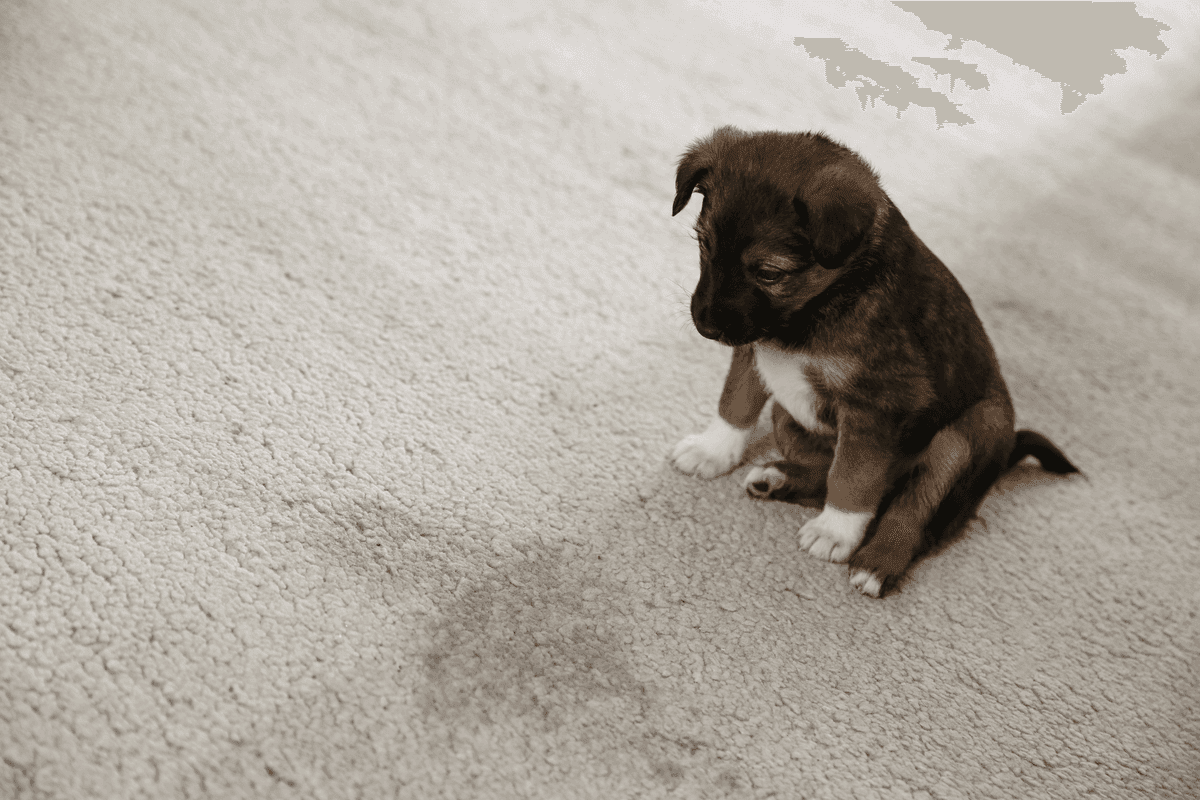
If you've been searching for pet odor removal in Martinez, GA, you've probably already tried a few things from the store shelf that didn't hold. The reason those products fail is straightforward: they only treat the surface of the carpet. Pet urine doesn't stay on the fiber. It soaks through the backing and into the pad, and that's where the smell actually lives.
Our pet odor service treats all three layers: carpet surface, backing, and pad. We do it without tearing up the carpet, and most cases resolve in a single visit. The treatment is safe for kids and pets, and the carpet dries fast enough that you're not living with a damp floor until the next morning.
Why the smell keeps returning
Urine creates two problems in carpet. The first is bacterial — bacteria break urea down into ammonia, which is the sharp smell you notice. The second is crystalline. As urine dries, it leaves uric acid salt crystals embedded in the pad and the bottom of the carpet fiber.
Those crystals are stable when the air is dry. They reactivate with moisture. In Columbia County, where humidity stays high from April through October, the crystals pull moisture from the air and release odor compounds all over again. That's why the smell comes back on muggy afternoons, after a rainstorm, or when you run the dishwasher.
A surface cleaner handles some of the bacteria on top. The crystals in the pad are untouched. Any treatment that doesn't reach the pad is a temporary fix at best.
What we treat
Pet urine is the most common reason people call, but we handle the full range of biological and chemical stains:
Pet urine and spray. Dog and cat, fresh and old. Cat urine is generally more concentrated and harder to treat than dog urine, but both respond well when the enzyme treatment is applied correctly and given time to work.
Pet vomit. Usually easier than urine because it doesn't soak as deep. Vomit contains stomach acid that can discolor carpet fibers if left for days, so treating it sooner is better.
Mold and mildew odors. Damp carpet, flooded areas, or spots where moisture got trapped — often from a previous steam cleaning. If mold is in the pad rather than just on the fiber surface, we'll tell you the situation.
Smoke odors. Cigarette, fireplace, or cooking smoke that has settled into carpet and upholstery fibers. We use an oxidizing treatment that breaks down the smoke compounds rather than just masking them.
Food and beverage stains. Coffee, wine, juice, grease, oil. The approach varies by stain type. Protein stains get enzyme treatment. Tannin stains (coffee, tea, wine) get an oxidizer. Grease and oil get a solvent-based pre-treatment.
Paint and ink. Harder cases. Fresh paint that hasn't fully cured usually responds. Dried latex paint and permanent marker are hit or miss. We'll give you realistic expectations before charging for the attempt.
The 6-step process
1. Assessment and UV inspection. We walk the carpet with a UV flashlight in reduced light. Dried urine fluoresces under UV, letting us map spots that are invisible in normal light. This is critical because pets return to the same spots by scent — if we only treat what you can see, the animal keeps targeting the ones we missed.
We map the locations, estimate penetration depth based on stain size and age, and give you an honest rundown of what to expect. Older, larger stains that have been in the pad for months are harder to treat than last week's fresh accident.
2. Targeted enzyme pre-treatment. Depending on the stain type, we apply either an enzyme solution or an oxidizing treatment directly to the affected area. For deep urine stains, the enzyme solution needs to penetrate through the carpet fiber, through the backing, and into the pad where the crystals are concentrated. We saturate the area enough for full penetration while controlling moisture carefully.
3. Deep extraction. After the treatment has had time to work, we extract everything — the enzymes, dissolved organic material, loosened dirt, and bacteria. This isn't a surface wipe. We're pulling contamination from deep within the carpet structure.
4. Odor-neutralizing treatment. This step addresses the uric acid crystals directly. We apply a neutralizer that chemically deactivates the salt crystals so they stop reactivating with humidity. This is the step that separates a cleaning that holds from one that seems to work for a week then fails once the weather turns muggy.
5. Rinse and fast dry. A final extraction pass removes remaining treatment solution. The carpet is left slightly damp and typically dries within an hour or two. No heavy wet smell, no soaking carpet, no multi-day dry time that creates its own mold risk.
6. Final inspection. We go over every treated area with you under both normal and UV light. If a spot didn't fully respond, we'll tell you whether a second treatment would help or whether we're looking at a pad-replacement situation. We don't sugarcoat it.
What surfaces we treat
This isn't carpet-only. Pet accidents happen on every surface in the house.
- Wall-to-wall carpet — the most common and usually the most heavily affected
- Area rugs — treated in-home, or through our area rug cleaning for a more thorough approach
- Oriental and hand-knotted rugs — need careful handling through our oriental rug service
- Upholstery and cushions — sofas, chairs, and cushions where pets sleep or have had accidents
- Mattresses — pets that sleep on beds leave dander, oils, and sometimes urine
- Car interiors — back seats that see muddy paws and occasional accidents
Honest expectations
Fresh accidents get the best results. If the accident happened in the last few days and you call us, there's an excellent chance we remove the stain and odor completely in one visit.
Set-in stains weeks or months old usually respond to treatment, but the stain itself may have permanently discolored the carpet fibers. We can resolve the odor even when the color change is permanent.
Repeat-accident areas where a pet has been going for a long time are the toughest cases. We treat them successfully most of the time, but severe cases occasionally need a second visit. In rare situations, the pad section needs replacement. We try to avoid that recommendation because it's not cheap, but if that's the honest answer, we'll tell you.
Protecting the treatment
Keep the pet off the treated area for the first twenty-four hours so the enzymes can finish working. Don't layer store-bought enzyme cleaners on top of our treatment — they can interact with our product and reduce effectiveness. Vacuum regularly going forward. Blot new accidents immediately with a clean cloth and cold water, then call us if needed.
For ongoing protection between visits, our antibacterial sanitizer can help reduce bacteria and allergen buildup in homes with multiple pets.
Book a pet odor treatment
Call us at 803-310-3848 or request a quote online. Same-day appointments are sometimes available in Martinez and the surrounding metro. If you're not sure whether your situation needs the pet odor service or just a regular carpet cleaning, call and describe what's going on — we'll tell you which makes sense.
The full rundown on pet urine
For the complete picture on cat and dog accidents across carpet, sofa, mattress, and rug, we keep a dedicated pet urine removal site with a page for each.