The sofa in your living room holds more than you'd expect. Skin oils from years of movie nights, food crumbs worked into the seams, pet dander embedded in the cushion fabric, and the airborne dust that settles into the weave every night. If you're considering upholstery cleaning in Martinez, GA, the simple pitch is this: it brings back a piece of furniture you might otherwise think needs replacing, for a fraction of the cost.
Most people don't notice the buildup until they flip a cushion and see the color difference between the side facing the room and the side facing the springs. That difference is accumulated body oil, dust, and grime. It happens gradually enough that you stop seeing it — like the way you stop noticing a smell in your own home. But it's there.
We clean upholstery using the same hypoallergenic, low-moisture process we use on carpets, adjusted for the fabric type. Most pieces are dry within a couple of hours. No water rings, no flooded cushion that stays damp for days, and no residue that pulls dirt right back.
What brings people to call
The most common reasons Martinez customers book upholstery cleaning: a pet accident on the couch, a guest spilling something visible, or a sudden awareness of how dingy the armrests have gotten. Sometimes it's furniture being sold or passed to a family member. Sometimes it's a new baby on the way and a deep-clean push before the house gets even busier.
Whatever the trigger, the goal is the same — lift what's there, eliminate the odors underneath, and leave the fabric feeling like fabric again. Not stiff, not crunchy, not sticky from dried soap.
What we can clean
We work on pretty much any piece of fabric-covered furniture in your home:
- Sofas, sectionals, and loveseats — the biggest pieces and usually the dirtiest, especially arms and headrest areas
- Armchairs and recliners — including power recliners with built-in motors; we work around the mechanism
- Ottomans — regular and storage
- Dining chairs and bench seats — fabric-covered seats pick up food stains and body oils from daily meals
- Headboards — fabric headboards collect skin oils and hair products nightly
- Mattresses — they hold dust mites, sweat, and allergens just like any other fabric surface
- Office chairs — desk chairs that see eight or more hours daily get surprisingly dirty
- Patio furniture cushions — outdoor cushions deal with pollen, mildew, and general Georgia outdoor grime
The 6-step process
1. Assessment and fabric identification. We check the care tag on the frame. It tells us what's safe: W for water-based cleaning, S for solvent-based, WS for either, X for vacuum only. We match our approach to the fabric rather than guessing. We also note the condition, existing damage, and stain types.
2. Pre-treatment. We target the areas with the most body contact and oil transfer — arms, headrests, and the front edge of seat cushions. These are almost always the dirtiest zones. The pre-treatment breaks down oils and loosens grime so the main pass can actually extract it.
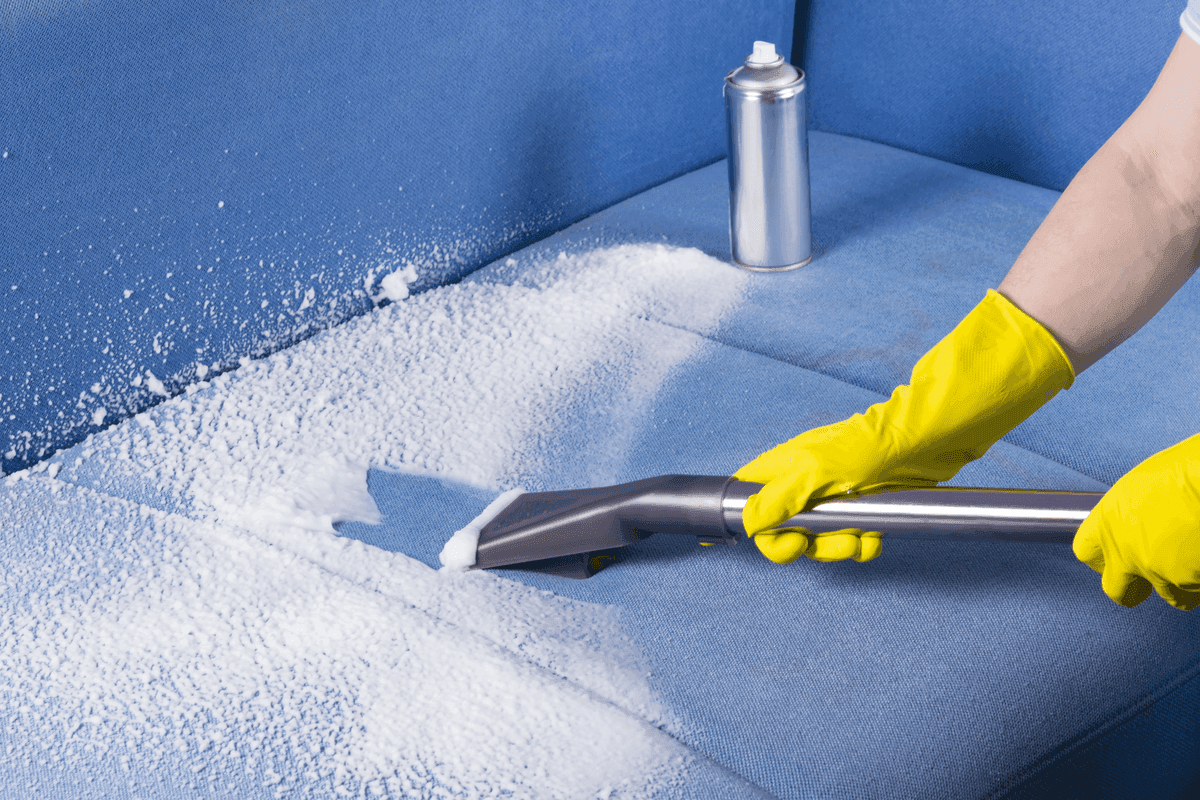
3. Deep cleaning and allergen removal. We apply our soap-free cleaning solution and agitate the fibers lightly. This is where professional cleaning separates from the foam-in-a-can products at the hardware store. Foam products deposit detergent that dries in the fabric and becomes a dirt magnet. Our process removes soil without leaving anything behind. The extraction pulls out dirt, allergens, dust mites, and whatever else has been accumulating.
4. Pet odor and spot treatment. Stubborn spots get individual attention. Pet stains may need enzyme treatment. Food stains may need an oxidizer. If something didn't fully lift during the main cleaning, it gets a targeted second pass with the right chemistry.
5. Rinse and quick-dry. We extract any remaining solution, leaving the fabric slightly damp but not wet. Standing cushions on their ends after we leave speeds drying. Most pieces are fully dry within two to four hours depending on fabric weight and the day's humidity.
6. Grooming and inspection. We brush the fabric to restore the nap and texture, then do a walkthrough with you. If something doesn't meet your expectations, we address it on the spot rather than making you call back.
Fabrics we clean
Microfiber. Cleans up well in most cases. The tight weave resists staining but collects oils and dust. Responds especially well to our low-moisture method without the water-ring marks DIY cleaning often leaves.
Linen and cotton. Natural fibers that stain more easily and can shrink with excessive moisture. The low-moisture approach matters a lot here — we've seen linen sofas ruined by someone who soaked a spot and scrubbed.
Wool blends. Durable but needs careful handling. Wrong pH or too much agitation damages the fiber. We adjust our solution and technique for wool.
Polyester and synthetic blends. The most common furniture fabrics sold today. They clean predictably, stains usually come out, colors hold, and drying is fast.
Leather and faux leather. We handle light cleaning and conditioning on finished leather. Raw or aniline leather is trickier and may need a specialist. Faux leather cleans easily in most cases.
Why upholstery cleaning is worth the investment
Extends furniture life. A decent sofa costs $1,500 to $3,000 or more. Cleaning it once or twice a year costs far less than replacing it, and a maintained sofa lasts years longer than one that never gets attention.
Improves air quality. Fabric furniture traps dust, pollen, pet dander, and dust mites like carpet does. Every time someone sits down, a small cloud of that material enters the air. For households with allergies or asthma, cleaning the furniture makes as much difference as cleaning the carpet.
Restores appearance. Fabrics that look dull and feel stiff after years of use usually just need a thorough cleaning. The dullness is a film of oils and grime. Remove that film and the original color and texture come back.
Safe for the family. Our cleaning solution is non-toxic, hypoallergenic, and soap-free. No chemical smell, no residue, nothing to irritate skin. Kids and pets can be on the furniture as soon as it's dry.
When cushion replacement is the honest answer
Heavy pet urine in a seat cushion soaks through fabric, through batting, and into the foam core. We can clean the surface and treat the odor, but sometimes the smell keeps returning from inside the foam. The honest answer in those cases is that the foam core needs replacement. We'll tell you that upfront rather than charging for a treatment that won't solve the underlying problem.
For normal grime, pet hair, food, and body oils, a single careful cleaning does the job. Twice a year keeps a well-used sofa looking respectable for much longer than most people expect.
Pet households: consider the sanitizer add-on
If you have pets, the antibacterial sanitizer is worth adding after the cleaning. It reduces the bacteria and dust mites that build up in fabric and takes down the lingering pet smell most families just stop noticing. Pair it with our pet odor treatment if there are specific spots that need deeper work.
Book an appointment
Call us at 803-310-3848 or request a quote online. We serve Martinez, Evans, Grovetown, and the rest of the metro. Most upholstery jobs can be combined with a carpet cleaning in the same visit if you want to knock out both at once.